
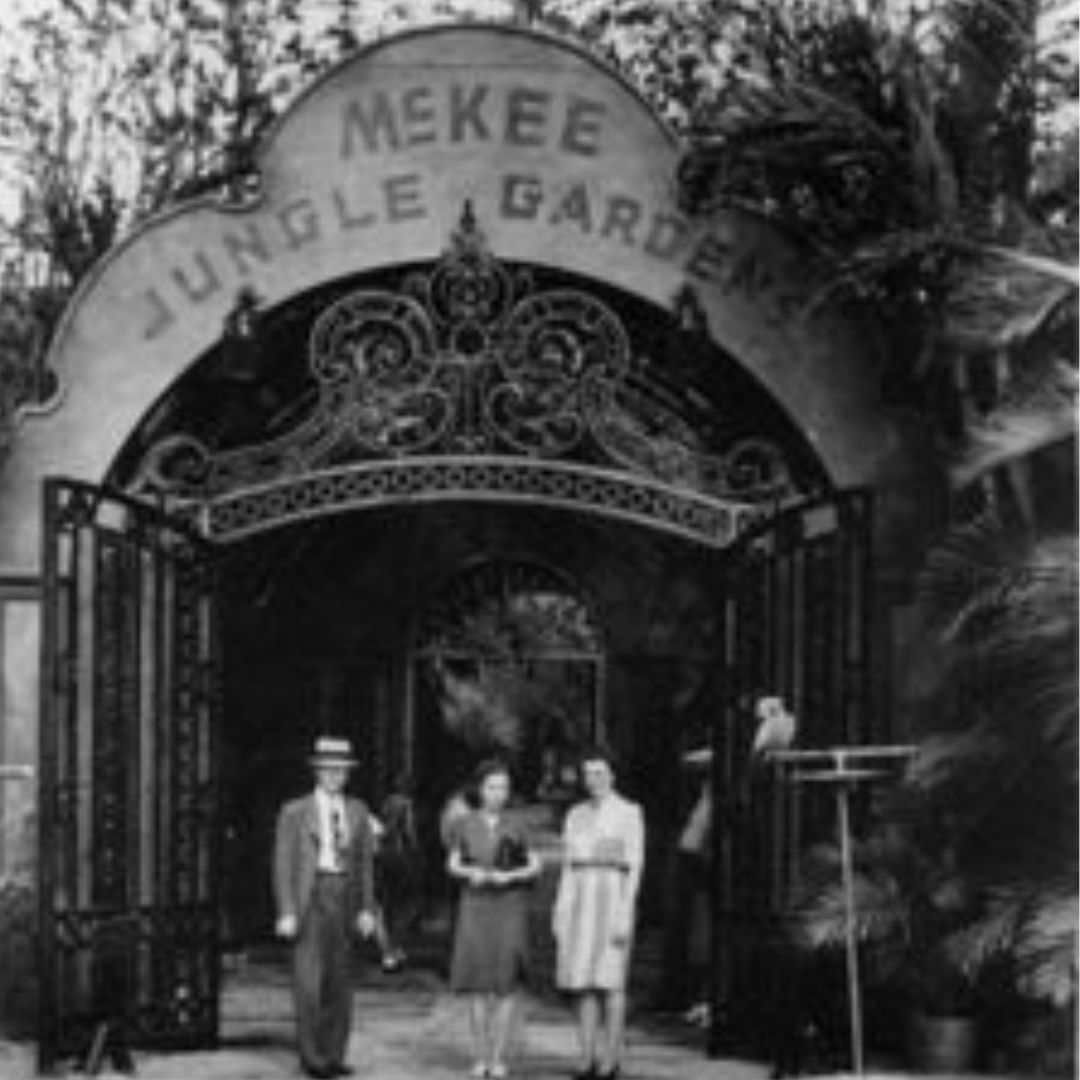
Waldo Sexton wasn't just a builder or a businessman, he was a dreamer. Known for his wildly creative style and eccentric flair, Sexton, alongside entrepreneur Arthur G. McKee, transformed a wild stretch of subtropical jungle along Florida's Indian River Lagoon into one of the most extraordinary botanical destinations in the United States. It was called McKee Jungle Gardens, and during its heyday in the 1930s through the 1960s, it was a living tapestry of exotic flora and fauna. A true Garden of Eden.
But today, only 5% of the original garden remains. What happened to the other 95%?
A Vision from the Tropics
Waldo Sexton and Arthur McKee opened McKee Jungle Gardens in 1932. While Sexton provided the creative vision and architectural flair, McKee, a Cleveland industrialist with a deep appreciation for nature brought financial backing and horticultural enthusiasm to the project. The two men traveled the world collecting rare plants. Orchids from Southeast Asia, bromeliads from South America, palms from the Pacific Islands. The garden, which once spanned over 80 acres, included winding jungle trails, waterfalls, wooden bridges, monkey habitats, and a wide variety of tropical birds. It was more than a garden, it was an immersive experience.
For decades, it drew national attention, featured in travel guides and postcards, and became a must-see stop for visitors venturing down Florida's coast.
The Slow Fade
By the late 1960s and into the 1970s, however, interest in roadside attractions began to wane. Disney World opened in 1971, shifting Florida tourism inland. At the same time, the population in Vero Beach and Indian River County began to grow. Land values rose, and the pressure to develop intensified.
By 1976, McKee Jungle Gardens was forced to close. A combination of declining tourism revenues, the rising popularity of large-scale theme parks, and increasing land development pressures made it financially unsustainable to maintain the expansive garden. Despite efforts to save it, developers acquired most of the land and bulldozed the tropical paradise. Homes, commercial buildings, and roadways replaced tropical orchids and sacred banyan groves. Much of Waldo Sexton's lush vision was lost. A casualty of unchecked development and changing tourism tastes.
What Remains, and What Was Saved
Miraculously, in 1995, a portion of the original land (roughly 18 acres) was saved through the efforts of the Indian River Land Trust and concerned community members. Thanks to a significant fundraising effort, the garden was revived and reopened in 2001 as McKee Botanical Garden.
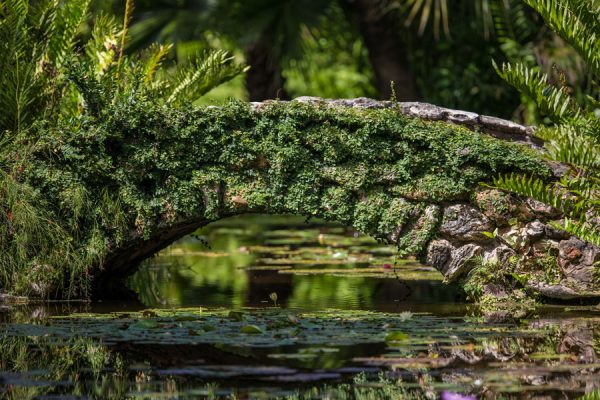
Today, McKee is a tribute to its past. In addition to restored waterlily ponds and original architectural features, the garden now hosts conservation workshops, school field trips, and rotating art exhibits, helping to keep the community actively involved in its preservation. A standout among its programming is the beloved annual Waterlily Photo Competition, which invites photographers of all ages and skill levels to capture the vivid beauty of McKee's iconic waterlilies. The contest not only celebrates local talent and artistic expression, but also reinforces the garden's commitment to honoring and sharing its botanical heritage. While only a fraction of the original remains, the garden features winding paths, tropical plant collections, and several original structures built by Waldo Sexton, including his signature driftwood and coral stone architecture. Seasonal exhibits, educational programs, and interactive installations continue to breathe new life into this historical treasure.
What We Lost
What visitors see today, no matter how beautiful, is just a whisper of what once stood. Gone are the sweeping acres of untamed jungle, the rare plants imported from around the globe, and much of Sexton's original vision. The loss of McKee Jungle Gardens is a stark reminder of the toll unchecked development can take on cultural and environmental heritage.
Why It Matters Now
In an age of climate awareness and sustainable planning, McKee's story is more relevant than ever. It poses questions worth revisiting:
- How much of our natural and cultural heritage are we willing to trade for growth?
- What does responsible development look like in a place as naturally rich as Vero Beach?
- And what can we do today to protect what remains?
A Call to Remember and Protect
McKee Botanical Garden stands not just as a beautiful attraction, but as a living archive and a place that tells the story of vision, loss, and revival. It invites us to imagine what could have been, and to work together so that what remains is never again at risk.
The legacy of Waldo Sexton deserves more than a plaque. Readers can support McKee Botanical Garden by visiting, donating, volunteering, or becoming a member. Advocating for green spaces and historical preservation in their own communities can also help ensure that places like McKee continue to thrive for future generations. It deserves preservation, restoration, and recognition. Not only for what he built, but for what was almost lost.
My name is Ava Cook and I am a Freshman at Florida Southern College in Lakeland FL. I am currently a B.F.A musical theatre major with a minor in Business Administration. I love reading, singing, acting, dancing, and writing. My favorite part about Vero Beach and Indian River County as a whole is how close the community is. Vero Vine is important to me as it allows me to do my part it bringing the community together also, sharing events, small businesses, and other local happenings. If you have any questions or any recommendations for me, my email is always open [email protected].
- Vero Vine's Photo Contests Are Making a Comeback - October 16, 2026
- How to Add Your Event to Vero Vine, Automagically - October 8, 2026
- Dog-Friendly Parks in Indian River County - October 1, 2026