
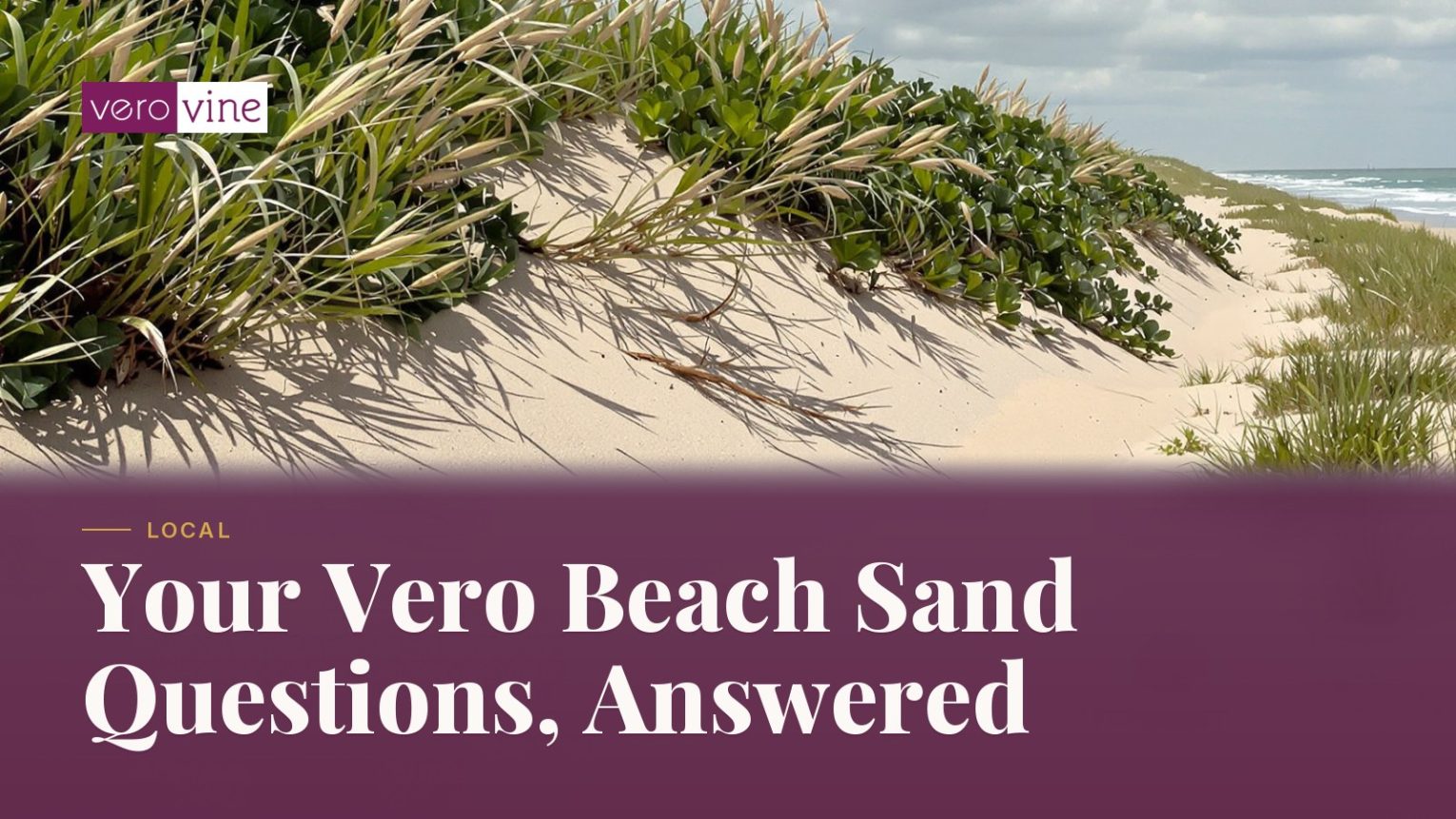
If you have walked the beach lately, you have seen it. Rough surf has cut into our dunes, and all of Vero Beach is talking about it.
That conversation is a good sign. People here care about this beach, and they have real questions: Why do we keep adding sand? Why not a sea wall? What about jetties, dredging and our reefs? Who pays for all this?
Here is the good news. Most of those questions were already on the table. On Oct. 6, Indian River County adopted an updated Beach Preservation Plan, a detailed look at all 22.4 miles of our coastline prepared by Taylor Engineering. We read it so you do not have to. Here is what it says.
Why does the county keep adding sand?
Because the plan found it works where it is done. Countywide, the shoreline has held steady, with an average gain of about 1.2 feet since 2019, even after Hurricanes Ian and Nicole. The plan calls nourishment paired with healthy dune plants the most reliable and environmentally compatible approach. Areas without regular management keep losing ground.
The stretch through much of Vero Beach, known as Sector 5, needs the most attention. It runs from near Tracking Station Park south toward Riomar and includes Jaycee Park and Humiston Park. The state lists all 2.7 miles as critically eroded, and the plan ranks it as the county's highest priority. Its dune line has moved back about 15 feet since 2019. That is why it received the restoration finished in March: 115,901 cubic yards of sand and about 117,500 native dune plants.

Illustration: Vero Vine
So did the new dune fail?
It is hard to watch a new dune get chewed up, and the people who live and walk there have every right to ask. It also helps to know what a dune is for. The county says dunes help buffer the land behind them from storm surge and wave energy, and slow erosion. The plan recommends keeping up this stretch with more frequent maintenance as conditions and funding allow.
Why not build a sea wall?
This one surprises people. A sea wall protects what is right behind it, but the plan says that once waves reach one, the energy bounces off and speeds up erosion. Over time that can narrow the beach and affect the neighbors next door. That means less room for families and for nesting turtles and shorebirds. The plan calls sea walls a last resort and does not recommend them for any part of the county.
What about jetties and breakwaters?
They are still being considered, carefully. Groins, the jetty-style structures that catch sand, stay on the list for further study, though they can shift erosion farther down the beach. Breakwaters could be an option at specific trouble spots if paired with new sand. They would have to be large to stand up to the Atlantic, and they have to avoid our reef.
Vero Beach actually has some history here. In 1996, the county installed an artificial reef just offshore in Sector 5. A 10-year study documented early erosion, then beach growth north and south of it, but no one has studied it recently. The plan says that should happen before any more are added.
Could we pump sand from offshore instead of trucking it?
That idea is very much alive. The sand for this year's Sector 5 project came from a mine in Fort Pierce, the closest source the plan evaluated. But a federal study of offshore sand was completed in 2025, and county committees have been comparing mines with offshore sources, including the cost of trucks versus dredging. The plan names offshore sand as part of keeping future options open.
What about our reefs?
They are a big part of every decision. The county has more than 4,000 acres of hardbottom reef habitat within 5,000 feet of shore, and that limits how far out sand can go without affecting it. Any design that would touch the reef needs extra permits and mitigation. Sand moving over these reefs naturally is part of the picture too, and the county monitors them after projects.
Who pays for it?
This may be the biggest surprise of all. According to the plan, Indian River County does not currently use property taxes to fund its beach management program, and it does not charge for beach parking. The state can share up to half the cost of beach projects, and visitors help through the tourist tax. Local voters approved raising that tax from 4% to 5%, in part to expand funding for beach renourishment.
The bigger question of how to pay for this over the long term is still open, and the county says it plans to study it.
Why it is worth the conversation
Our beach gives a lot back. The plan counts about 2.5 million beach visitors in 2024, about $233 million in annual economic impact and nearly 9,000 jobs tied to beach tourism. It is also a remarkable nursery. As of Sept. 12, 2025, the county had recorded 11,295 sea turtle nests for that season.
How you can help
- Stay on the walkovers and off the dunes. Sea oats and other dune plants hold the sand together with their roots.
- Read the plan and judge it for yourself. It is free on the county's website.
- Ask your questions. The county's Coastal Engineering office is at (772) 226-1648.
- Own oceanfront property? Beach easements help projects move forward and keep them eligible for funding.
There are no easy answers, and the ocean always gets a vote. But a town that argues this hard over its beach is a town that loves it.
Now we want to see your beach. Do you have an old photo of the Vero shoreline? Share your oldest one with us, and we will put together a Then and Now gallery.
Images in this story are illustrations created by Vero Vine.

My name is Ava Cook and I am a Freshman at Florida Southern College in Lakeland FL. I am currently a B.F.A musical theatre major with a minor in Business Administration. I love reading, singing, acting, dancing, and writing. My favorite part about Vero Beach and Indian River County as a whole is how close the community is. Vero Vine is important to me as it allows me to do my part it bringing the community together also, sharing events, small businesses, and other local happenings. If you have any questions or any recommendations for me, my email is always open [email protected].
- Free Narcan Is Easy to Find in Vero Beach. Here Is How to Keep It Ready. - October 30, 2026
- A Vero Neighbor Wants to Help Ambulances Get Through Route 60 - October 30, 2026
- Your Vero Beach Sand Questions, Answered - October 30, 2026
See everything happening around Vero in our weekly issue.
Read the latest full issue